.png)
.png)

June 22, 2026
The DOLIX Model®: A Research-Based Framework for Transformative Group Coaching
January 11, 2026
Dominique Mas, PCC
In group coaching, it’s tempting to focus on content: teach the concept, answer questions, send people away with action steps. But the group coaching programs clients rave about don’t feel like a class. They feel like a courageous space where people get insight, take action, and experience real support.
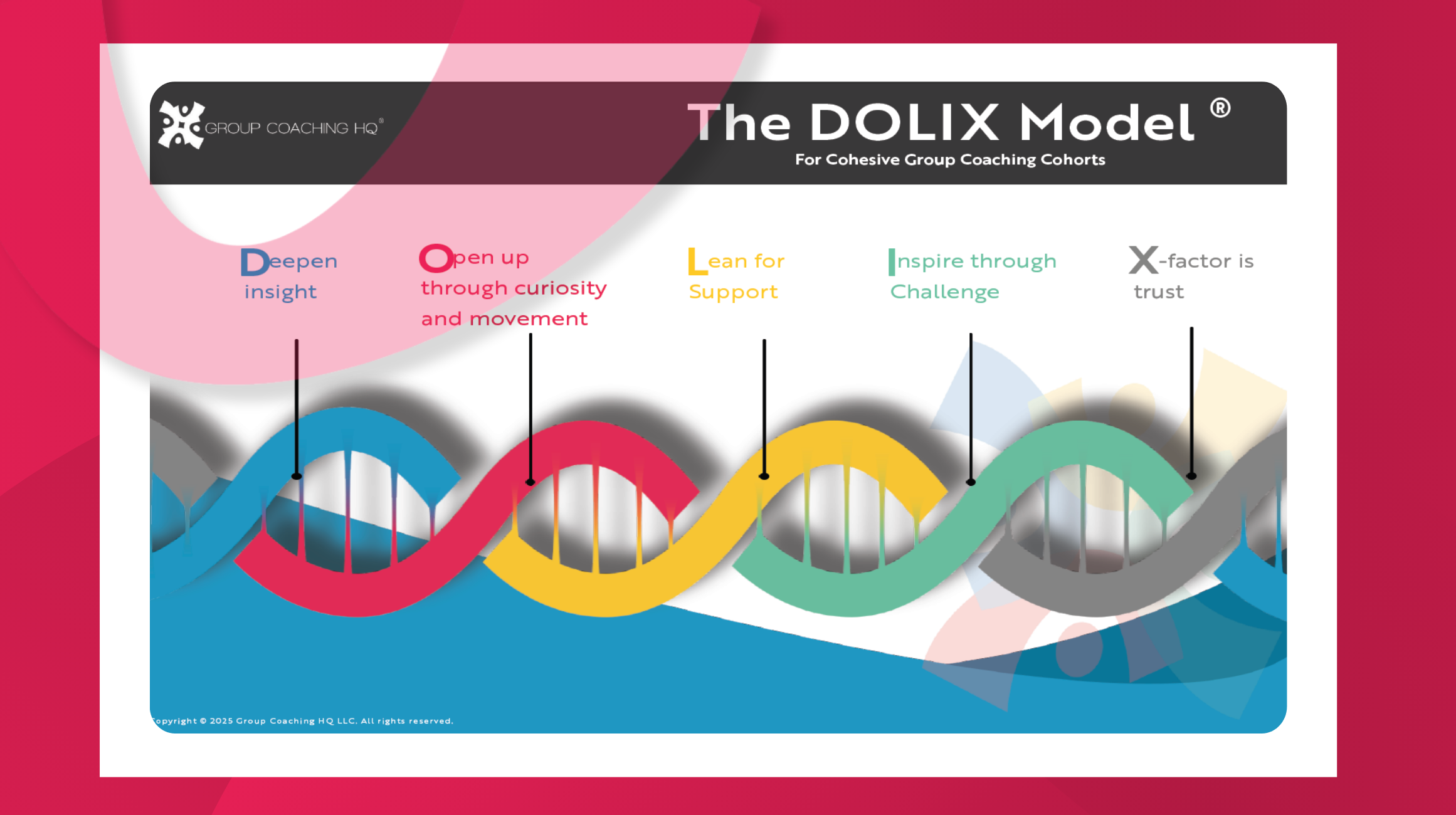
The DOLIX Model® was created to help coaches design group coaching that delivers that kind of transformation. The DOLIX Model® is a dynamic, interconnected framework that highlights five essential actions that drive cohesion and change: Deepen, Open, Lean, Inspire, and the X-Factor: Trust. Use it to plan your sessions and make better coaching choices when the room shifts.
A high-level tour of the five actions in the DOLIX Model®
Deepen (Insight). Deepening insight creates the conditions for reflection. In group coaching, that means helping each member slow down, notice patterns, and increase self-awareness so they leave with clearer internal direction. It’s about ensuring that each person feels that they are diving deeper into their goals. Several times during a session, you might ask: “What are you learning about yourself from this conversation?” or “What is becoming clearer with regards to the situation you brought to coaching?”
Open (Curiosity and Movement). Curiosity and movement are all about exploring. This opening keeps the group coaching session from turning into advice-giving or being focused on solutions. It encourages genuine inquiry between members and turns that curiosity into movement: small, specific commitments that create forward progress. Ensuring that following insights, there are several moments in the session when you encourage participants to open up by asking each other questions, and to make moves by encouraging them to commit to action.
Lean (Support). Lean is the belonging layer of group coaching. Members remember, reflect, and cheer one another’s journeys, building the emotional connection that makes it easier to stay engaged and keep going. This is a space where everyone is invested in each other’s success and a space where it’s ok to ask for support. As a coach, we want to ensure we create moments of acknowledgment too because most of our participants don’t take time to appreciate themselves. You might ask questions like: “What do you want to acknowledge the group for today?” or “What is a strength you have observed in other group members today?”
Inspire (Challenge and Storytelling). Inspire is where growth gets real. In group coaching, challenge is offered with respect: members invite one another to take bold action, explore inconsistencies, and stretch into a bigger version of what’s possible. As a group coach, it’s key to provide moments of challenge, and remember, with permission only! We all have those days when challenge doesn’t feel right. You might encourage the group to come up with the most challenging question they have for each other! “What’s a challenge you have for [PERSON]?” or “What’s a challenging question you’d like to ask [PERSON]?”
X-Factor: Trust. Trust is the foundation that holds everything together. When group coaching participants feel safe and judgment-free because of their connection to one another, they are more willing to be open, take healthy risks, and tell the truth. Ensuring that you, as a coach, intentionally create moments when group members can get to know each other in smaller breakouts will help build this trust. Eventually, when each group member trusts every other group member, psychological safety can unfold. Start with co-creating agreements with the group and ensuring that meaningful connections are happening from day 1.
Why the DOLIX Model® isn’t a checklist
Many group coaching frameworks get treated like steps. The DOLIX Model® is different: it’s a living framework, a dynamic helix where the elements interact. In every group coaching session, you can check in: Is trust strong enough for challenge? Are we creating space for insight and then bringing in some movement? Is support being offered and received in the form of questions? Are we asking questions that inspire and stretch? Those questions help you, the coach, adjust in real time, so the group stays cohesive, brave, and transformational.
What to do next
If you’re building or refining a group coaching program: cohorts, communities, leadership groups, or client experiences, the DOLIX Model® gives you a simple language for what’s happening beneath the surface and a repeatable way to design for it.
This post is the overview. The full DOLIX Model® guide goes deeper into the research base, facilitation practices, and session design ideas for each element. And if you want to learn to apply it with confidence, it’s taught inside our ICF-accredited group coaching certification program.
Bring the DOLIX Model® Into Your Group Coaching Practice
Use the DOLIX Model® guide to design group coaching sessions that build insight, trust, and meaningful change. A practical, research-based framework you can apply with confidence in any group setting.
m