
Building a Coaching Ecosystem at Southern Glazer's
What does it mean to move from a few coaching programs to a fully embedded coaching ecosystem?
With
Tracey Cammock
Senior Director, Coaching
Southern Glazer’s Wine & Spirits
October 27, 2026




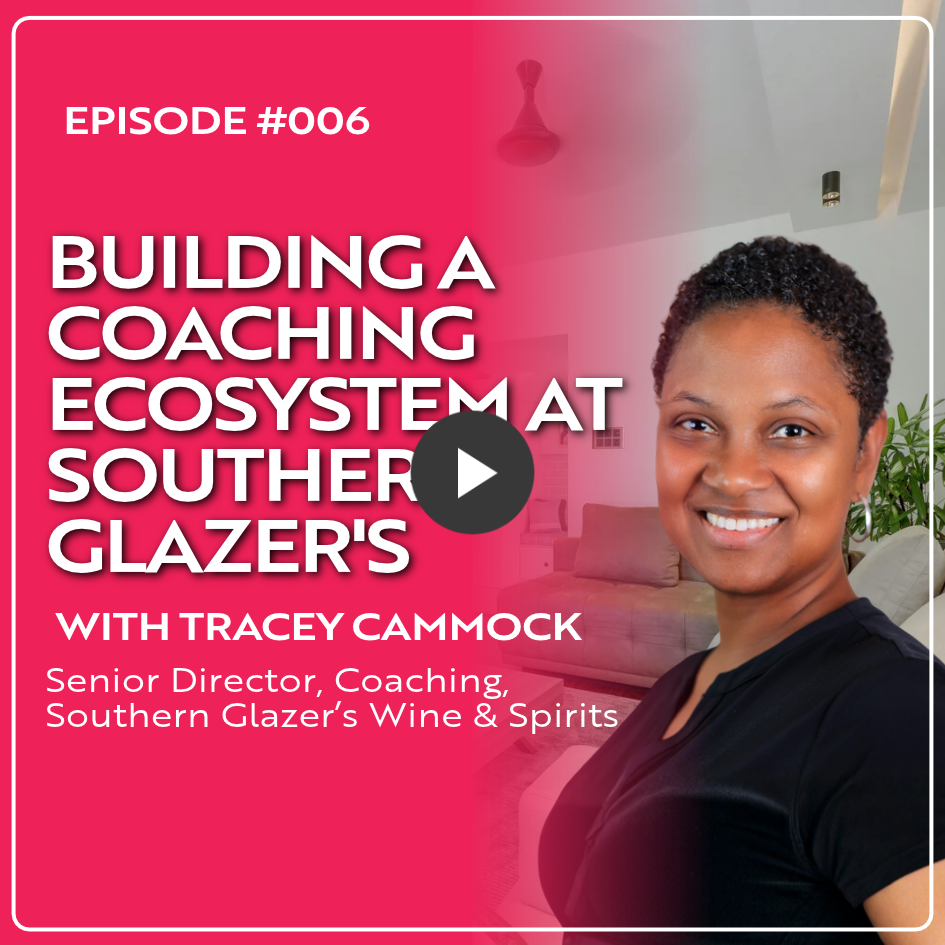
In this episode of the Coaching in Organizations podcast, Tracey Cammock (Senior Director of Coaching at Southern Glazer's Wine & Spirits) shares how her team grew from six trained internal coaches to more than 80, and moved from isolated programs to a coaching ecosystem. She voices that a great coaching program with glowing feedback does not change a culture. You'll also hear how a shared coaching language and the HEART values anchor her work at SGWS, how pre- and post-program feedback from direct reports tracks real behavior change, why coaching is never remedial, how group coaching circles extend leadership programs, and why letting go was the hardest and most important step to scale. Tracey also shares how AI nudges could support coaching between sessions without losing the human connection.
If you're passionate about coaching cultures, internal coaching, or building capacity through group coaching in organizations, this episode is a must-listen.

What if the fastest way to build a coaching culture was not a new program, but the moments that already exist in your organization?
Tracey Cammock, Senior Director of Coaching at Southern Glazer's Wine & Spirits, breaks down how coaching became part of how leaders show up every day, not just something people learn in a workshop.
00:00 - Introduction and Tracey’s Coaching Origins: Dominique introduces Tracey Cammock and the episode’s focus on building a coaching culture. Tracey shares how her HR business partner work led her to recognize coaching skills and pursue formal certification.
05:43 - Scaling Coaching Across the Organization: Tracey describes Southern Glazers’ growth from six trained coaches to over 80, along with programs like Leader as Coach and team coaching. She explains why broader access and a shared model were needed to scale beyond HR.
09:26 - Common Language and Coach-Like Values: Tracey explains how a shared vocabulary and the GROW model anchor conversations and clarify what coaching is and is not. She also shows how the company’s HEART values turned out to be coach-like behaviors, strengthening the culture shift.
13:39 - Closing the Gap Between Design and Practice: Tracey discusses how strong program design and positive feedback did not guarantee behavior change on the job. She describes embedding coaching into performance and career conversations to bridge that gap.
17:26 - Measuring Leader Behavior Change: Tracey explains how pre- and post-program assessments completed by direct reports measured leadership behavior shifts. She also notes that the surveys themselves helped prime leaders to focus on coaching behaviors.
21:19 - Non-Remedial Coaching and Group Circles: Tracey describes intake conversations that keep coaching from being used as a fix for underperformers. She then explains how group coaching circles after leadership programs evolved from two 90-minute sessions to three 60-minute sessions.
25:38 - Letting Go and Team Support: Tracey reflects that the hardest part of her role has been trusting others to deliver coaching without her oversight. She credits executive leaders, HR partners, and the internal coach community for making the work possible.
29:15 - AI, Nudges and Protecting Human Connection: Tracey argues that human connection remains central to coaching even as AI advances, since technology cannot read tone or body language. She suggests AI could handle administrative nudges between sessions while coaches focus on deep conversation.
32:00 - Advice for Building a Coaching Culture: Tracey advises finding a sponsor and integrating coaching into experiences people already have. The host closes the episode with thanks and information on following and subscribing.
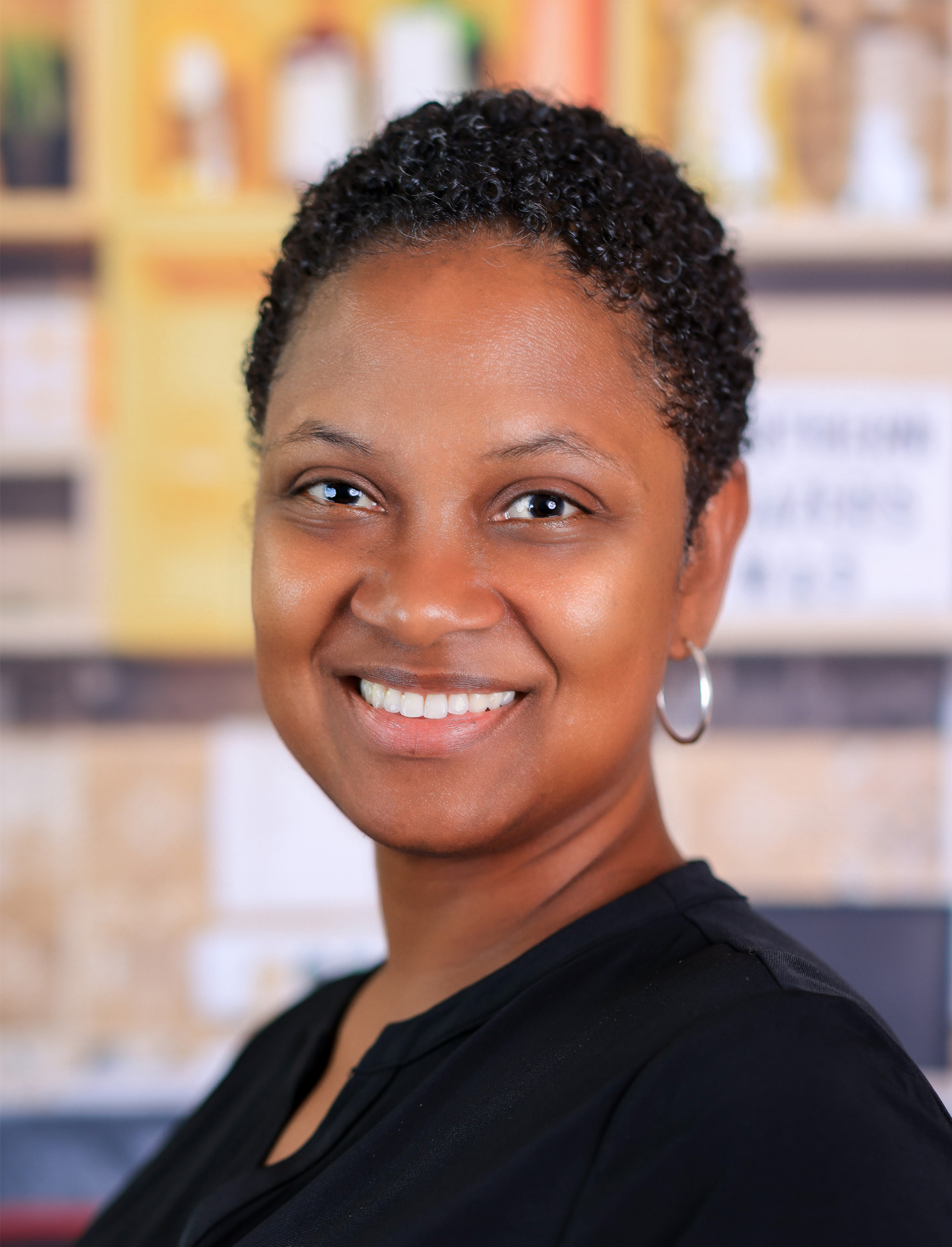
Tracey Cammock is a senior coaching and talent development leader and an ICF Professional Certified Coach. She leads enterprise coaching strategies that strengthen leadership capability, reinforce organizational values, and connect behavior change to business outcomes. Her work includes executive, team, and group coaching; internal coach development; leader-as-coach programs; and scalable coaching tools and systems.
Dom Mas: Hi, you're listening to the Coaching in Organizations podcast, real stories and strategies for building coaching cultures within organizations, with an unapologetic love of Group Coaching.
Hi, I'm your host, Dominique Mas, and I'm the founder at Group Coaching HQ. Today my guest is Tracey Cammock, Senior Director of Coaching at Southern Glazer's Wine & Spirits.
I actually met Tracey through a LinkedIn introduction, out of all places. And as soon as we connected, I immediately knew that her passion for creating a coaching ecosystem in her organization would make a great conversation.
And I was right. Tracey is a wonderful, thoughtful, and incredibly humble professional.
In this episode, we dive into what it takes to truly build a coaching culture that goes beyond a program here and there. Tracey shares how it took perseverance, patience, hard work, and a whole village, from a leadership team and HRBPs who care and understand the value of coaching, to ensuring that everyone in the organization has a common vocabulary and understanding of what coaching is.
I'm sure you'll enjoy this conversation just as much as I did.
Hi Tracey, welcome to the Coaching in Organizations podcast.
Tracey Cammock: Hi, Dom. It's great to be with you today. Thanks for having me.
Dom Mas: Absolutely. I'm really excited about our conversation.
You are a Senior Coaching and Talent Development Leader at Southern Glazer's. You are also an ICF PCC coach. You lead enterprise coaching strategies that strengthen leadership capacity, reinforce organizational values, we'll talk about those, and connect behavior change to business outcomes, the secret that everyone wants to know. Your work includes executive, team, and group coaching, internal coach development, Leader as Coach programs, and scalable coaching tools and systems. Everything that you do is focused on coaching, developing others in using coaching tools, using coaching techniques.
So before we go anywhere, I want to know what got you into coaching.
Tracey Cammock: You know, my coaching journey started probably 20 years ago when I was in graduate school. One of my programs, or the classes, we had a coaching component. And I always thought, "Oh, this would be interesting as a career. One day, maybe it will be my retirement career."
And then I ended up working as a HR business partner in an organization, and I realized a lot of the conversations that I was having with the people in my client group were about giving advice and guiding, and I needed to really deeply listen. But ultimately, the decision that they made would be up to them. So a light bulb went off, and I realized, "These are coaching skills."
I remember that class I took about coaching. Maybe it's time for me to actually go deeper and learn the discipline more formally. So back in 2008, 2009, I ended up getting certified as a coach so that it could accelerate the work that I did as an HR business partner. So that's when I started.
Dom Mas: I'm so curious then, because you had that realization that actually those are coaching conversations and coaching skills I'm using. From the little I know of you, I know that coaching really is a part of everything you do. So I'm curious how that started to translate for you in building a coaching culture at Southern Glazer's.
Tracey Cammock: Yeah. So I was still in an HR business partner role when coaching started to get some traction here at Southern Glazer's. And about 4 years ago, the organization decided we want to invest in the discipline more formally. So I was excited to raise my hand and apply when the opportunity came up for a lead coaching role to further expand on the discipline.
And at that point, we had already started training about 6 leaders so that they could become certified as coaches, and we wanted to accelerate and take it to another level. So because I already had experience supporting the business and the training experience behind me as a certified coach, I was able to see where we can insert coaching more organically, right? Not make it just a program or a one-off thing, but attach it to existing things that happen.
So when I was a business partner, a lot of the things I did were new leader assimilations. I would help leaders as they were transitioning into their role, and I thought, "Okay, well, these are all things that coaching can supplement." So that actually helped us accelerate the coaching culture here at Southern Glazer's.
And back in 2024, we applied to the International Coaching Federation's Impact Award for Coaching in Organizations, and we won the runner-up category. So we were able to get some recognition as a newer organization on our coaching journey, which really has been exciting for us.
Dom Mas: I'd love to, just so that our listeners understand the landscape at Southern Glazer's, I'd love for you to share a little bit more about what that looks like, how many internal coaches you have, what sorts of programs are running, that sort of thing.
Tracey Cammock: Yeah. So it's exciting, the landscape where we are now. So we started with 6 trained coaches in 2021, and then every year after. We did take 1 year off from our internal coach education. But we are a Level 1 provider of coaching services with the International Coaching Federation, so we get to run the program in-house.
We're now up to over 80 certified coaches, trained coaches in the organization, which is phenomenal. Myself and my colleague, James Garcia, we run the training internally, so it's really been fun. But that's just one piece, right? Coach education alone isn't going to get us there.
We also operate a Leader as Coach program inside the company, so that way anyone can access coaching skills, practice coaching, and we have coaching circles embedded in other journeys as well. So those are the main programs.
And then in addition, we have team coaching now. So that's one of our newer disciplines. We probably started that in 2024, late '24, using a high-performing team, that Patrick Lencioni model of coaching. So those are a couple of places coaching is showing up.
Dom Mas: I'm so curious because you said in your very first year you certified 6 internal coaches, and then once they were trained, then perhaps what did you realize was missing, or what pushed you to continue training others?
Tracey Cammock: Well, we knew 6 wouldn't be enough to scale coaching, right? And the 6 were that we coach trained are within our HR business partner or talent development. So they're typically within the HR function. So they have access to helping shape the culture, and we knew that was important.
So now that we're up to the 80, that's great to create more of a ripple effect, but we also wanted to give access to everyone and make it more inclusive. So we decided the first step was, we need a common language and a common model for coaching. And we adopted the GROW model here, and that's something that we had already been using in different programs, but we wanted to do an assessment and see where are the places that it could show up that it hasn't necessarily shown up.
So that helps with people just using the same language as they're talking about coaching and learning coaching. And then we also wanted to integrate it in the we have like a middle-level leader program that people learned about coaching, but to create some more continuity, we attached learning circles to that experience. And so by adding the learning circles, they had dedicated time to feel the coaching experience, leverage the GROW model, and practice the skill of coaching.
And so after we did that for a while, we said, "We probably need to take it to another level," and then eventually added another program called Leader as Coach.
Dom Mas: Oh, so great. You mentioned something that I think a lot of people find difficult. I know from a couple of guests that we've had who've talked about it, and other conversations that I have, the importance of having that shared vocabulary and understanding of what coaching is. And I'm curious for you, what the impact of that common understanding has been in creating that coaching ecosystem, that coaching culture.
Tracey Cammock: It's something that I would say it helps us anchor, gives us the anchor for how the conversations happen. And when people talk about coaching, we're redefining what coaching is and is not.
It's not about being punitive in any way when someone is saying, "Oh, I think a coach would be great for this individual." We're going to ask deeper questions to better understand how coaching could truly support the person. Are there challenges with performance? Is the leader being clear about what the expectation is? Is coaching really the opportunity?
So having that common language gives us something to, one, anchor, "Here's what it is, here's what it's not." And then when we're moving forward, we're all moving in the same direction.
So really, it's being coached like that helps us to show up appropriately, right? We ask more questions. We get curious when someone says something. We ask, "What does that mean to you?" Because it might mean something different than what we're expecting how coaching would show up here.
Dom Mas: What you just said just then also, I think, is so important. You found that the supporting behaviors behind the HEART values, which you'll tell us about in a second, the values at Southern Glazer's, were basically coach-like ways of being. And so in addition to having that common vocabulary, it was supported by action, by behavior. So I'm curious, how did that discovery almost change, perhaps, the way that you positioned coaching to the business?
Tracey Cammock: It made it easier, honestly, because whenever we're running a program or an initiative, one of the things that we'll do is anchor it to our vision, our mission, our strategy, and our values. So we'll open up our conversations with those in mind.
And so when we saw the new HEART values, which were probably, I don't know, 2 years ago, I'm guessing, is when it started to really get some traction in the organization. When we recognized that those supporting behaviors were all coach-like behaviors, then we said, "Okay, now we really are going to be able to shift the culture to a coach-like culture more intentionally."
Because the values for us isn't just something we want to have on the wall. We really want it to be embedded in how the leaders are showing up.
So HEART is the acronym for honesty, excellence, agility, respect, and teamwork. And underneath each of those, with honesty as an example, it's about communicating clearly and transparently and holding yourself accountable. That's something important in coaching.
Excellence is really embracing that ownership mentality. So that's us empowering others as well. Agility, we ask people to be open-minded. Again, that's something that we want people to bring to a coaching experience. Respect, it's empowering and helping others to succeed. Again, that's something that is very much coach-like. And then lastly, teamwork. That supporting behavior is actively listening and collaborating.
And so everything that I just shared when I read them, I was like, "Oh my gosh, this is what we teach when we teach coaching, and it's now living in our values. This is amazing."
Dom Mas: You learned that strong design of any program and great participant feedback do not automatically create culture change. So you have the values, you have the coaching programs, etc. But when did you see that gap of great design of programs and then what it actually looks like on the ground to build that culture?
Tracey Cammock: Yeah, I love that question because we can have the best ideas and design it perfectly, and everyone shows up and they have the experience. But then when they go back to their business as usual, are they really living the values? Are they living what they learned and using the skills?
And so what's been important for us is measuring and getting feedback and asking questions along the way. So we'll partner with our HR business partners and get a sense of how is this showing up in the market now. And there have been times where we've gotten feedback where someone has said, or multiple people maybe have said, "This was a great program, but I don't know if I'm seeing my leader experience or I'm not experiencing my leader in the same way that I just learned about."
And so what we realized is we needed more intersections and connections to how we're demonstrating this. Is it embedded in our performance process, our talent conversations, our career conversations? We're rebranded career coaching conversations.
So we find ways to take things that already exist so that way when the leaders are engaging in behaviors and connections with their team members, they're doing it with that coach approach. And if we see opportunities that we can then meet the business where they are, we may then go into a market and offer something that is supplemental and supportive of the initiative and the way of being that we're looking for.
Group Coaching HQ: Quick pause, because if you're responsible for scaling coaching across regions or business units, this is for you. If you're like many of the coaching and talent leaders out there, you're being asked to expand access to coaching while still driving ROI, retention, and building a real coaching culture. Those who get this right are investing in structured group coaching.
And that's where we at Group Coaching HQ come in. Coaches from global brands, universities, healthcare systems, and public sector organizations have joined our ICF-approved 12-week group coach certification program, earning 30 ICF CCEUs while gaining the frameworks, toolkit, and community to confidently build and lead impactful group coaching programs.
Need something tailored? We deliver custom workshops, train-the-trainer programs, and consulting to help you design the right structure for your organization. And if you want turnkey support, we provide seamless, high-quality group coaching delivery from coaching matching through to final reporting.
If you're ready to amplify leadership impact through small group interventions, visit groupcoachinghq.com and find the collaboration option that's right for your organization.
Dom Mas: What, for you, helped to put these measures in place to notice, "Oh, yeah, the behaviors are not really translating"? Because I think that'll be really helpful for anyone listening.
Tracey Cammock: Part of that was the early design of some of the programs. So as an example, when we were creating Leader as Coach, one of the things we wanted to do, which was we like the concept of start with the end in mind, right? So by the end of this, what do we want leaders to think, feel, do, and represent as a part of going through this experience?
And so we said, "Okay, we want them to ask more open-ended questions to their team. We want them to listen more than they talk when they're in one-on-ones. Solicit input from others. Not only impose their solutions, right?" That's the kind of traditional command and control approach.
And so when we put the program together, we intentionally put some assessments in the process so that the direct reports of the leader could then answer these questions pre and post-session. Okay, how are they demonstrating these skills before they go through the experience? And then how are they demonstrating the skills after they go through the experience?
And so just the act of being asked the questions will also, I'll say, prime the mind of the person answering the questions that this is something that is important here and that they should do. So the survey wasn't designed only for, "Okay, are we going to see this marked change in the behavior?" But as a way to get people seeing what's important here as well.
Dom Mas: So you've measured behaviors, and then how have you seen the manager's behavior actually shift? What tells you, again, in everyday life that, "Hey, this is real. This is, yeah, something like how leaders might take feedback after a coaching conversation," or?
Tracey Cammock: That's actually the thing for me is how they're taking the feedback after the conversation and even sometimes during coaching conversations. I've been fortunate to coach some of our, I'll say, senior and very influential leaders inside the organization. And I could come in with my own bias that says, "This person's not going to be open to learning. They're too high up, so to speak, to listen to me or lean into the coaching experience."
And every time, I'm surprised because I find that they show up curious. They expect me to hold them accountable and say, "Okay, how have you implemented the thing that you said you were going to do? How did that go?" And just the act of asking them questions and them being really open to being vulnerable and showing like, "Okay, I actually didn't do the thing I said I would do."
Or maybe they said, "The conversation didn't go as I planned," and I ask more specifics. "Well, tell me exactly what you said. How did that how did it work?" And then I realize you thought you said it, but you didn't clearly communicate what you said you were going to communicate. And then they recognize, "Oh, shucks. I really didn't do it."
So me being able to be that accountability partner for them and them really being open to it has been it just enriches me and it warms my HEART to see that with our leaders.
Dom Mas: Thinking about coaching and what you use it for, because I think that is a part of, of course, not being perfect, is that there are people who might be struggling, and then coaching sometimes is pushed as, "Hey, let's put this person in coaching and fix them."
So your role is we talked about this before. Your role is that coaching is never remedial.
So how do you hold that line when someone perhaps asks for a coach for someone else?
Tracey Cammock: What we do to prevent that is we have intake conversations with our HR business partners and the leaders of the individual that they're requesting a coach for. And so the purpose of those conversations is to really assess what's driving the need for coaching. Are there performance challenges with the individual? What has the performance been for this individual? What has the feedback already been to this individual? What are they looking to see different as a result of coaching?
If it turns out that it's something that is performance-based or even a specific skill, coaching isn't there to teach skills. So it's there to help the individual unlock something in themselves that they already have. And we're creating that space and the container for them to become more self-aware.
But we're only bringing coaching to those who are already performing well and strong, even from a team perspective. It's for the teams that are doing well, and we're trying to help accelerate their team connective tissue and help them become even more high-performing. But it's not to be used in a remedial way because, one, that's not the role of a coach. That's the role of the leader to manage the performance of that individual. And the coach is there to help unlock the performance of those who are already doing great.
Dom Mas: In this podcast, we talk about coaching, and we do have an unapologetic love of group coaching. So I'm curious what your use of group coaching is at the moment or not, or what you're planning for it. Tell us a little bit about that.
Tracey Cammock: That was probably one of the first coaching experiences that people really got to dip their toes in here was group coaching because we attached it to an existing workshop as kind of an add-on. So previously, people would attend a three-day experience, and they learned about coaching inside that experience.
And so we wanted to deepen and strengthen it by bringing the individuals in that experience together in small groups for a few months following. So the first year, we had two 90-minute sessions of coaching circles with the individuals in small groups of four to six.
And then because feedback is so important to us, we got some feedback after that first year and realized, "Okay, two 90-minute sessions, it's hard to get it scheduled, and it's not creating enough of a bit of a journey for people to engage with that coaching." So then we switched it to three 60-minute sessions. So finding one hour, one is easier for six people in various functions of the business to come back together.
And then that space in between session one and session three helped them to really unlock something even greater because in between sessions, they also are asked to go and practice the thing that they brought to the coaching session or what was an insight that they can now walk away with. So it just created a little bit more stickiness for them to receive coaching and practice coaching following that program.
So that's one of our main ways of group coaching is a coaching circle following a leadership experience. So we have that in multiple programs that follow on coaching circle model.
Dom Mas: Well, coming towards the end of this, and one thing that I want to ask you, and it's a little more personal because you said that this amazing work, and you clearly have so much passion for it, you said it requires patience, stronger stakeholder engagement, letting others own and adapt it. And I'm curious for you personally, because you are a superhuman, yet a human, what was the hardest and what did letting go make possible?
Tracey Cammock: Oh, the hardest is letting go for me, right? Letting go that I can't be a part of every experience because I mentioned protecting the brand of coaching is important.
And so it doesn't matter how much structure we put in place and definitions and education and refresher courses and being there to quality check, I'll say, at some point, I have to trust and believe that coaching is showing up in the best way that is going to support the need at that moment that matters.
And so that's been the hardest for me, but that also has been the thing that has accelerated coaching inside the organization. So we have our commercial teams really focused on building a coaching culture, and that's a huge population.
And so to now have that traction is so refreshing to see that the language of coaching has legs beyond our small center of excellence. So that's been really amazing.
Dom Mas: Tracey, one of the things that strikes me too is your humility. And you have said to me that you did not do this by yourself. So tell us a little bit more about the support and the team it took to make this happen.
Tracey Cammock: I would say, and I appreciate you asking the question because as you mentioned that this is all me and I've done this, I could not do this without the support of everyone who was involved in even first creating this role and having it as a vision. So Amy Kickham, our head of HR, Greg Boots, our VP of Talent, Strategy, and Culture, and then my partner in crime, James Garcia, who is also a coach.
And then that community of 80 internal coaches, they're the ones who allow us to bring coaching to life in all of the coaching circles, the one-on-one engagements, the team coaching engagements. So I feel really honored and privileged that I get to work in an organization that values coaching, made the investment, and then the people are backing it and behind it, our values showing up the way they do.
I wasn't the one who created that, but our executive leadership team had an experience where they were working on creating the new values, and then the entire organization got to take part in that experience as well. So this really is a company effort, and I'm very lucky that I get to be here. So thank you for asking.
Dom Mas: Thank you so much for sharing that. Yeah, thank you. It takes a village. It takes a village.
My last question for you is about the next leap for you. Of course, we're all talking about it, AI-augmented coaching, data-informed coaching ecosystem.
How do you plan to broaden access with things like nudges and potentially a coach in your pocket? Whatever you can share, tell us a little bit about AI coaching and protecting the human depth of coaching at the same time.
Tracey Cammock: The human element is really important. And with AI advancing the way it is, I think it's going to be that much more important for us to continue to be deeply human and lean into the human connection.
So anything we do with technology is going to be there as a supplement, not to take away from this one-on-one type of experience, right? I can talk to an AI with voice and ask questions and get some ideas, but they're not going to the AI itself can't notice the tone and inflection or the fact that I leaned away or I leaned in or there's an energy that it not yet. I'm sure there will be a time that it gets there, but at this point, it's not there.
And we still want the human-to-human connection, and that's the thing that's most important to us. I mean, our business is about creating moments that matter. So we want to make sure that those moments, even from a coaching perspective, are still deeply human.
So from an AI perspective, the way I could see us using it is like a nudge between a coaching session. So if I'm meeting with someone once a month and they're making a commitment to practice a behavior in between sessions, maybe there's some automation that happens that nudges them to say, "How are you doing with that commitment you made?" And they could respond quickly. So they're capturing their notes and getting a friendly reminder where that's not something the coach would always do.
The coach may check in with them in between and say, "How is it going?" But it's more of an administrative thing, right? We want the AI to take away kind of the low-value administration work, but still create a better experience for the client so that they are now having that moment to pause and reflect and capture some things about the thing that they're practicing in between sessions.
Dom Mas: And I was lying! This is my last question now because this is a question that we ask all of our guests. What is your best advice to those who are looking to build the coaching culture at their organization?
Tracey Cammock: Start with a sponsor and find a place that you can integrate it into an existing experience. People don't always make time for something new, but they're always open to better experiences and moments. So if you can incorporate it into an experience or a moment that is already taking place, you'll probably get more traction. So find a sponsor and find a place that you can supplement it with coaching.
Dom Mas: Amazing. Tracey, so grateful for your generosity, your willingness to share your experiences and everything you've done.
We started with saying just how much coaching is embedded in the culture at Southern Glazer's, and clearly, a lot of it comes from the work you've done. So I'm super, super inspired, actually, by everything you've done, and I'm sure everyone listening is as well. So thank you.
If you are listening to this podcast, please do reach out to Tracey. And for those of you who are listening, while you go and follow and connect with Tracey on LinkedIn, remember to follow us as well on LinkedIn, on Instagram, on YouTube, and remember to subscribe to our email for updates for upcoming events.
Tracey, thank you again so much for being here with us today. Look forward to continuing the conversation offline.
Tracey Cammock: Thank you.
Dom Mas: Thanks so much for joining us today. Follow us on LinkedIn, Instagram, and YouTube at Group Coaching HQ. And remember to subscribe to our mailing list for updates and upcoming events. You can find all of the information and links in the show notes. The Coaching in Organizations podcast is brought to you by Group Coaching HQ and is produced and edited by Marc Pagan.
Tracey Cammock: Coaching, data-informed coaching ecosystem.
Dom Mas: How do you plan to broaden access with things like nudges and potentially a coach in your pocket? Tell us whatever you can share. Tell us a little bit about AI coaching and protecting the human depth of coaching at the same time.
Tracey Cammock: The human element is really important. And with AI advancing the way it is, I think it's going to be that much more important for us to continue to be deeply human and lean into the human connection. So anything we do with technology is going to be there as a supplement, not to take away from this one-on-one type of experience, right?
I can talk to an AI with voice and ask questions and get some ideas, but they're not going to the AI itself can't notice the tone and inflection or the fact that I leaned away or I leaned in or there's an energy that it not yet. I'm sure there will be a time that it gets there, but at this point, it's not there. And we still want the human-to-human connection, and that's the thing that's most important to us.
I mean, our business is about creating moments that matter. So we want to make sure that those moments, even from a coaching perspective, are still deeply human.
So from an AI perspective, the way I could see us using it is like a nudge between a coaching session. So if I'm meeting with someone once a month and they're making a commitment to practice a behavior in between sessions, maybe there's some automation that happens that nudges them to say, "How are you doing with that commitment you made?" And they could respond quickly. So they're capturing their notes and getting a friendly reminder where that's not something the coach would always do.
The coach may check in with them in between and say, "How is it going?" But it's more of an administrative thing, right? We want the AI to take away kind of the low-value administration work, but still create a better experience for the client so that they are now having that moment to pause and reflect and capture some things about the thing that they're practicing in between sessions.
Dom Mas: And I was lying. This is my last question now because this is a question that we ask all of our guests. What is your best advice to those who are looking to build the coaching culture at their organization?
Tracey Cammock: Start with a sponsor and find a place that you can integrate it into an existing experience. People don't always make time for something new, but they're always open to better experiences and moments. So if you can incorporate it into an experience or a moment that is already taking place, you'll probably get more traction. So find a sponsor and find a place that you can supplement it with coaching.
Dom Mas: Amazing. Tracey, so grateful for your generosity, your willingness to share your experiences and everything you've done.
We started with saying just how much coaching is embedded in the culture at Southern Glazer's, and clearly, a lot of it comes from the work you've done. So I'm super, super inspired, actually, by everything you've done, and I'm sure everyone listening is as well. So thank you.
If you are listening to this podcast, please do reach out to Tracey. And for those of you who are listening, while you go and follow and connect with Tracey on LinkedIn, remember to follow us as well on LinkedIn, on Instagram, on YouTube, and remember to subscribe to our email for updates for upcoming events.
Tracey, thank you again so much for being here with us today. Look forward to continuing the conversation offline.
Tracey Cammock: Thank you.
Dom Mas: Thanks so much for joining us today. Follow us on LinkedIn, Instagram, and YouTube at Group Coaching HQ. And remember to subscribe to our mailing list for updates and upcoming events. You can find all of the information and links in the show notes. The Coaching in Organizations podcast is brought to you by Group Coaching HQ and is produced and edited by Mark Pagán.