.png)
The “2-Hours-Back” Playbook: Proving Coaching ROI
How do you prove coaching works without reducing people development to a single performance score?
With
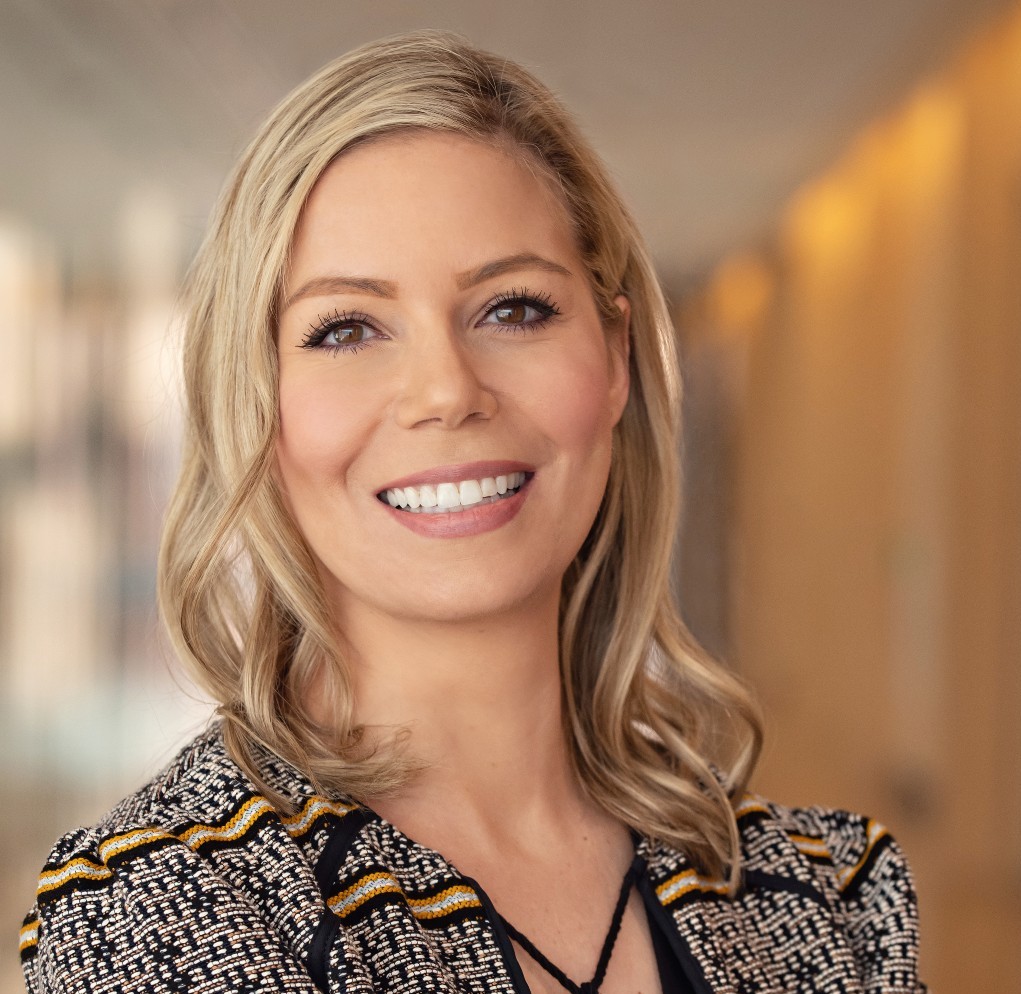
Michelle Davis
Program Manager, Executive Coaching
Wipfli
May 5, 2026





How do you prove coaching works without reducing people development to a single performance score? In this episode of Coaching in Organizations, Michelle Davis (Program Manager for Executive Coaching at Wipfli) shares how her firm built an internal coaching practice, launched a group coaching pilot focused on strategic time management, and translated results into business language leaders trust. You’ll hear what she measured, what she stopped measuring (and why), and how manager involvement strengthens impact while protecting confidentiality.
If you’re passionate about coaching cultures, internal coaching, or building capacity through group coaching in organizations, this episode is a must-listen.

02:29 Michelle’s Coaching Origin Story: Michelle shares what led her to become a coach and her transition from an external to an internal coach.
07:49 Accountability to Business Outcomes: Michelle discusses how her role shifted when she became an internal coach and accountable for business outcomes.
09:30 Coaching Culture at Wipfli: Michelle describes the coaching culture at Wipfli, including who receives coaching and the types of programs offered.
13:17 The Group Coaching Pilot: Michelle details the group coaching pilot, its participants, and the business needs it addressed.
14:40 Measuring Impact of the Pilot: Michelle explains the three key metrics used to measure the pilot’s impact: engagement, satisfaction with time management, and time saved.
19:48 Translating Impact to ROI: Michelle discusses how they translated the pilot’s results into ROI for leadership, combining quantitative and qualitative data.
21:38 Removing Performance as a Metric: Michelle explains why the decision was made to remove overall performance as a measurement in coaching programs.
23:19 Including Managers in Impact Measurement: Michelle describes how managers are involved in measuring the impact of coaching engagements.
26:26 Personal Realizations as an Internal Coach: Michelle shares her personal insights and shifts experienced while building the coaching culture at Wipfli.
28:06 Managing the Dual Role of Internal Coach: Michelle addresses the challenge of being both a coach and an employee, and how she manages boundaries when learning sensitive information.
Transforming people and workplaces from functioning to flourishing drives Michelle's work as an internal coaching leader. She envisions the workplace as a space where professionals can live out their values, cultivate meaning, and become their best selves.
Michelle leads the internal coaching practice at Wipfli, a professional services and advisory firm, where the practice's mission is to empower associates to realize their highest potential and live the lives they imagine. Prior to becoming a certified coach, she spent 15 years in business development at the University of Michigan.
Dom Mas: Hi, you're listening to the Coaching in Organizations podcast, Real Stories and Strategies for Building Coaching Cultures within Organizations, with an unapologetic love of group coaching. I'm your host, Dom Mas, and I'm the founder at Group Coaching HQ. Today, my guest is Michelle Davis, Program Manager of Executive Coaching at Wipfli. I met Michelle on a panel and immediately knew that she'd have a ton to share about the pilot group coaching program they had built. So in this episode, we dive into a topic that's on every internal coaching leader's mind. How do we measure and prove the impact of coaching and group coaching? Michelle shares a simple ROI formula that leaders believe in. She talks about why tying coaching to performance measures can backfire and how to pair data with testimonials so the story lands with sponsors. And you get to learn about her as a human, which is truly delightful. Welcome! Michelle Davis is my guest today. She's the program manager for executive coaching at Wipfli. Hi Michelle!
Michelle Davis: Hi Dom!
Dom Mas: Oh, great to see you.
Michelle Davis: Great to see you.
Dom Mas: Great to see you. I'm really excited. I'm gonna share a little bit about you and then you can tell me if I missed anything. But one of the main things that you shared with me is that transforming people and workplaces from functioning to flourishing is something that drives your work as an internal coaching leader. You envision the workplace as a space where professionals can live out their values, cultivate meaning and become their best selves. You lead and have been leading for a little while the internal coaching practice at Wipfli, a professional services and advisory firm where the mission is to empower associates to realize their highest potential and live the lives they imagine. A fun fact that informs how you show up in your work today is that prior to becoming a certified coach who spent 15 years in business development at the University of Michigan, Did I miss anything?
Michelle Davis: No, that's a great summary, thank you.
Dom Mas: Yeah, thank you so much. And I'm excited. So I'd love actually to add a little bit to that bio and for you to give us the short origin story. What pulled you into coaching and what is it that made you move from being an external coach to being an internal coach?
Michelle Davis: Yes, it's an adventure. I think every coach has an origin story of some sort that kind of led ourselves on this path. But so you mentioned I worked at the University of Michigan. I was there for 15 years, had a really great career, was climbing that ladder and finding success. But I think like a lot of people, I had a mid-career crisis or an awakening, however you want to look at it. And I got to a point where I quite frankly, was very overwhelmed looking above and ahead of me, knowing what kind of work lay ahead and feeling like, is this what I really want to do for the rest of my career? And then following that thought, like, what do I want to be when I grow up? And in your late 30s, you're like, I should have figured this out by now. So I was grappling with those thoughts. And so I hired a coach. I hired a coach to help me work through it, through that experience, obviously, was transformational, I got to understand what coaching is. And thought, hey, wow, maybe I could do that. This is like a dream career. I think like a lot of coaches say in their previous careers, they were the people that people would come to for their challenges, what was exciting them. So I definitely was that person. And I thought, well, maybe I could be good at this. So I was still working full time and I decided to go through coach training and thought, I don't know if this is going to go anywhere, but I know it'll make me a better leader. I know it'll probably make me a better parent, spouse, all of those things. So showed up that first day of training in Chicago and, you know, just looked around and I said, these are my people and this is what I have to be doing. So I planted that seed in that first training session that, okay, I don't know how or when, but I'm going to do this full time. So fast forward, I was able to, over a period of about a year, to be able to transfer out of the University of Michigan and then to a full-time coach and got to work with different organizations as an external coach, which was awesome. So I did that for about six years and I obviously enjoyed it. I think especially for people who have worked in complex, large organizations, very hierarchical, becoming a solopreneur was exhilarating. I mean, it was so exciting to be able to like, "Oh, I get to build a website." And you know, you get to be your own boss and all of those things. I think for me, it started to wear off in about year five and I was starting to miss teamwork and working with teams toward a goal together, that affinity piece, I was missing. Of course, I was collaborating with coaches, but it just wasn't the same. So I started to get that feeling of kind of like, this is kind of lonely, honestly. And then the impact piece around, I'm working with all of these people in different organizations, hoping I'm having an impact and hopefully that's rippling out. But honestly, how much impact can I have with one person and one organization, right? So, or a couple of people in one organization. So I really started to think, gosh, to be an internal coach, that could be cool, right? Like you're working with one organization, it's people and knowing kind of the mission and the values and the challenges of one organization and really being able to dive in deep that really became compelling to me. So, yeah. And so I tell people who are interested in becoming internal coaches, there are not a lot of rules out there. I mean, obviously it's like a needle in the haystack. I just honestly feel like I got lucky in that I jumped down to a LinkedIn job description, posting and filled out an application and I got a call back. That's how it happened.
Dom Mas: So that's amazing to hear. And actually welcome to the culture at Wipfli in a second. I'm curious for you though, as you became an internal coach, what changed when you became accountable to business outcomes? Because as an external coach, you're working with that one person. But as you said, when you are an internal coach, you have a lot, a much wider picture to look at and a lot more to take into consideration. So what changed for you?
Michelle Davis: I would say, you know, it's definitely a shift, right? From being an external coach where you can, for the most part, really hold the client's agenda, right? And really focus on them. Obviously you're getting information and from, you know, their managers usually and kind of understand the business a little bit to then be internal and learning to hold both my clients agenda within the business's priorities, right? So I think of it as sort of like, the business priorities and goals are the frame and I get to work with my clients within that frame. So it's not, I don't find it to be confining in any way or hard to do, I think it's a dance, right? and I probably don't do it perfectly all the time. But I definitely, because I believe in the work that we do with this firm, it makes it easy to do honestly, to be able to hold both of those things. But it definitely was a shift that I had to make.
Dom Mas: Yeah, thank you so much for sharing that because our focus for today is gonna be thinking about measuring impact. And I think unless we have business outcomes top of mind in everything we do in our coaching programs, it's gonna be really hard to measure impact. So I really appreciate you actually calling this in. And I'm curious if you could tell us a little bit about the coaching culture at Wipfli. What does it look like? Who gets coaching? What type of coaching? What sort of modalities do you use? I'd love to hear a little bit more about the bigger picture.
Michelle Davis: Yeah, so I would say we are in our toddler hood of coaching at Wipfli. It started as a pilot in 2022 with just 18 of our tax associates. And over time, it has grown into a three times a year program for our managers, senior managers and directors across the firm and high potentials, right? We only work with high potential associates, which is great. We also have a partner program. So we do coaching with some of our partners. So that was it when I came in. We were really just doing one-on-one coaching, but I saw an opportunity when I came in. Again, great positive culture, really wanted to be able to scale coaching to more people because when I came in, there was one coach, one internal coach. We've since been able to double in size, we hired one other internal coach. So how do you scale that, right? There's only so many hours in the day, obviously.
Dom Mas: It's just to clarify that one coach was you.
Michelle Davis: One coach was me. That one coach was me, yes. And so, but again, only with two coaches, we do have a bunch of some really great external coaches as well, but you know, it's small. And I want more, I think the goal of any coach is for everyone to experience coaching in some way. And so I saw an opportunity for group coaching, obviously. I've had some training in group coaching and have done it as an external coach in some organizations. So I thought this could be a great place to be able to expand. So we did a pilot recently that was successful and we have plans to do more of it and make it part of our, you know, like a real program that we do continuously. And then we also are doing some team coaching as well. And we're definitely moving toward growing that as well. The other piece that we have started doing is teaching coaching skills to managers. So we have what's called a boot camp for managers and a module in that is teaching coaching skills and practicing. I mean, part of it is obviously teaching, but a big portion of it is practicing. So that has been really fun to be involved creating that program and growing it and we just keep iterating it now. And it's in person which is really cool. Yeah we get to you know meet our associates in person and I think it especially in that practice piece being in person really makes it real. Yeah it creates a different type of relationship and also for for them right to have that connection it's wonderful. I'm curious I Thank you for sharing the bigger picture of how coaching is working at Wipfli. And also, how awesome. What a great coaching culture for what, four years of coaching. You said you started in 2022 and where you are now, it sounds really outstanding and it sounds like it's spreading and rippling through everybody, including managers learning coaching skills, which is wonderful. As we're focusing and thinking really about measuring impact and measuring ROI, I'm curious, let's focus for a second on the pilot, on the group coaching pilot. Can you tell us a little bit more about who it was for and what was the business needs? Because that's, I'm assuming, what's going to help you measure the impact of it. So could you share a little bit more about that? Yeah, so for context, so I work in a professional services firm. So numbers and metrics are the language that we speak around here, right? So I knew that whatever we designed needed to be measured. And so I had that in mind. A couple of things were at play. And another thing was we kept hearing from our coaches in one-on-one sessions about time management. How can I manage my time better? I have so much on my plate, overwhelm, all of those things. And I think every coach, you know, who works with professionals and organizations, this is such a common topic. So that was happening. In addition to just a lot of change happening within the firm, we have a real priority around growth now that didn't exist five years ago. And so I was thinking, I was putting all these things together and thinking, okay, what if we did a pilot around strategic time management for high potential senior managers and directors and measure it, right? So we knew that we needed a robust pre and post coaching surveys to be able to see impact. So the three measurements we tracked were engagement before and following coaching. That is a major measurement of coaching for all of our programs. The other thing--
Dom Mas: Can I pause you for just one second if we move to the next two? Can you tell us a little bit more about what engagement, how you measured engagement and what did engagement mean in this context?
Michelle Davis: Yeah, so we have the same sort of three questions in all of our pre-coaching surveys around how engaged you feel in your work? How do they feel about, you know, satisfaction around their role, compensation, all of those things. So that's how we kind of talk about engagement. So engagement, the other piece is how satisfied they were with their time management skills. I mean, this was obviously specific to this program. And then in our post survey, we asked, how much time per week they were able to save due to going through the group coaching program. So those were the three things that we wanted to measure. And of course, we saw really great results. We had an average of two hours a week, saved for participants who went through it, engagement increased about 20%, and satisfaction with time management increased by two points on average. So, and it was a short islet. We only had five sessions, 60 minutes long, you know, over three months. And so, you know, if it was successful there, I think if we, when we do it again for other populations, we'll make them longer. I'd love to make them 90 minutes over six months, just to, I think we can have even bigger impact.
Dom Mas: Quick pause, because if you're responsible for scaling coaching across regions or business units, this is for you. If you're like many of the coaching and talent leaders out there, you're being asked to expand access to coaching while still driving ROI, retention, and building a real coaching culture. Those who get this right are investing in structured group coaching. And that's where we at Group Coaching HQ come in. Need something tailored? We deliver custom workshops, train the trainer programs, and consulting to help you design the right structure for your organization. And if you want turnkey support, we provide seamless, high-quality group coaching delivery from coach matching through to final reporting. If you're ready to amplify leadership impact through small group interventions, visit groupcoachinghq.com and find the collaboration option that's right for your organization. Groupcoachinghq.com.
Dom Mas: How many people did you have in each group?
Michelle Davis: I think it's five.
Dom Mas: Only five.
Michelle Davis: People always want to know.
Dom Mas: Five, that's great.
Michelle Davis: Yes.
Dom Mas: That's so great.
Michelle Davis: Yeah.
Dom Mas: That's such a magic number. Five, six, six, four people to really gel. And especially in 60 minutes, they give you just enough time for everyone to feel like they're being seen and able to share.
Michelle Davis: I'm curious because you're the expert in group coaching. What do you see around what's optimal in groups for group coaching?
Dom Mas: Yeah, we always talk about six people is really the ideal for people to feel that the group is still intimate enough that they can build trust with every other person in the group. And in terms of timing length, we always think about it like six up to 60 minutes is fine. And then if we have more than that, our groups are usually 6 to 8. And if we have more than 6, then we'll go to 75 or 90 minutes just to again, so that there's enough time for everyone to feel that they've been able to to share their challenges and get a little bit of individual coaching as well.
Dom Mas: I love that you did that so much. And I love that you started with the end in mind than really thinking about what you wanted to measure before you started. And I am guessing how you measured ROI so that you could tell a story to leadership that they would trust and that they would appreciate so that you could get buy-in for future programs. But I'd love for you to share how you did that. So you measured how much time was saved and then how did you translate that into ROI for your leaders?
Michelle Davis: Yeah, so it's funny, good timing because we just, so this pilot was, we had a sponsor for it and one of our partners in the firm. So she helped us source and enroll participants for it, which was great. And so yesterday we had a debrief with her to kind of walk her through all of the results, you know, the impact of the program. We shared with her testimonials, which I think are really important. And the other thing that's not necessarily measurable, but we definitely shared it with her and she loved this, was just the camaraderie that was created in the groups and the support. And, you know, we got so many comments around, "I feel less alone. It's nice to know I'm, you know, other people are experiencing this." I was able to be supportive of people who I didn't know in the beginning, but got to know throughout the program. So I think it's sometimes it's those intangibles that definitely added to the presentation that we made to her. And she really appreciated both the qualitative and the quantitative data. And she was really excited afterward and said, OK, how can we do more? I want to-- I want my group to do more of this. So that's all you could ask for, right? Yeah, that's so awesome. That's so awesome.
Dom Mas: Yeah, thank you. And you just said something I want to follow up on, if you don't mind. You said coaches and their managers, do you include managers in measuring impact? And if so, how do you do that?
Michelle Davis: Yeah, so we do with our one-on-one coaching engagements. We have, like I think a lot of organizations do, we have an alignment meeting before the coaching kicks off. So it's the three of us talking about what the coachee would like to focus on. the manager then gives their feedback on what they see as opportunities for growth. And then we move into just the one-on-one. And it's obviously the coachee agenda on what they want to work on, but we make it clear in that alignment meeting that we expect the coachee and the manager to be talking to each other about the coachee experience, what they're working on, and changes that they're making. So we're hoping it's a conversation they're having throughout the process. We check in as coaches with the manager halfway through, just say, hey, just checking in. Obviously we can't share anything because our conversations are confidential, but wondering if you're seeing any changes or if you have questions, reach out. So it's just to check in and also to remind them to check in with their coachee about their goals. So then afterward, we do send just a short survey to the participant to ask, did their coachee, share their progress with their goal? And there's an NPS score as well for the managers. So yeah, we do like to include them. I think coachees appreciate it because especially if they're working on their goals and making progress, it's a way for them to, they can highlight that in their performance review, right? And so I think it's a way to highlight the work that they're doing with their manager.
Dom Mas: Yeah, I love that so much. Thank you. Thank you for sharing. One of the things that we've done, too, is we've given managers a list of questions to help them check in with the coachee. So things like, hey, how are you-- what are you learning? Or how are you seeing yourself change? So we've given them a list of almost coaching questions that they can use at any time, even if it's in passing, like a quick one. So maybe something to think about as well.
Michelle Davis: I know. I have to get that list from you. I think that's such a great idea because they need help, right? In knowing what to reach out on, what's appropriate to reach out on, and what kinds of questions to ask. So I love that idea. I'm going to steal that.
Dom Mas: No problem at all. All right, we are coming towards the end of this and I want to come back to you. We started with you and your journey into coaching and the shifts that you've made and the way you've supported the culture to change at Wipfli. And I'm curious for you as a human, as a coach, what's been your biggest personal realization or shift through the adventure of building this coaching culture, building the pilot?
Michelle Davis: Yeah, that's a great question. I think one is affiliation. I've learned is really important making that shift from an external to internal coach, it just feels so much more engaged with the organization, with the people. So I've just learned I really like being a part of an organization. I like creating long-term relationships with people and teams, so that's one. Another one is impact. I feel because we're building a coaching culture, we can embed ourselves in so many different programs that I really do feel like we are making an impact. And obviously part of that is measuring it, but also just the feedback and testimonials we get. It feels like we're not only making impact individually, but this ripple effect throughout the firm. And I think it's just growing as we do more and more culture building around coaching. I'm learning that I really like the mix. I get to coach part of the time, but I also get to do program management and design, and talking with our leaders about what they need. I'm learning that I really like that mix. It keeps it exciting. I like the variety of it.
Dom Mas: I love it. I love it. Thank you for sharing that. I have two questions for us to end on. I'm going to switch them around because what you just shared about being an internal coach actually is a perfect segue into our previous guests questions. So Catherine, that you know, Catherine Lord from ICF Coaching and Organizations was our previous guest and she left a question for you, which is internal coaches sit in a dual role, both coach and employee. So when you learn things in coaching that could change how you see the organization or its people, how do you manage that boundary?
Michelle Davis: That's such a great question. You know, Catherine, great question. She's so good. Yes, I'm not surprised this question came from her. I would say generally speaking, I'm really able to compartmentalize well. And so while I'm getting glimpses of parts of the business based on especially my one-on-one coaching conversations, I know that I'm hearing what I'm hearing are individual experiences from their lenses based on their lived experiences and backgrounds and mindsets, right? So I think I'm just able to kind of compartmentalize, because at the end of the day, as coaches, we are coaching the person, right? Not the problem. And the problem typically is around the context of their role, their, you know, the firm, all of those things. And so I'm really, I think more focused on the person. That being said, When I see a pattern over time around a particular topic coming from lots of different associates or partners, I do think it's a role to escalate it so it can be explored. We have a unique perspective as coaches because we get to have these really deep conversations that can help make positive change within the firm. It's always aggregated data. I would never talk about people individually because our conversations are confidential. But I do think if you were hearing something across the firm to escalate that and just let it be known that this is sort of the feeling or the vibe happening right now, I think that we have that opportunity to do that.
Dom Mas: Thank you so much for that. And I'm going to ask you to end on what is your best advice to those who are looking to build the coaching culture at their organization.
Michelle Davis: I would say number one, getting your leaders on board, right? Being able to make the case that building a coaching culture is important. And here's where the ICF has a ton of resources. So they have white papers. There are things that you can download that is official and research, there's research behind it. So I would say for sure, making the case, getting your leaders on board. And if you do that, like start experimenting. That's what I did. Where are ways that I can embed coaching into existing programs? Or where is there a gap of support or knowledge that maybe coaching can help with? We just started a group coaching within one of our new partner programs. So we, again, just sort of experimenting, we scheduled four group coaching sessions. It's a year-long program, and we're about halfway through with those. But it's been great. Like we didn't have to do too much, right? Where it's already happening. Let's see if we can just slip this in, get some data, look at the impact. So that's what I would say is, get leaders on board, start experimenting, and see where you can just kind of embed coaching into existing programs.
Dom Mas: Oh, thank you so much, Michelle. This was amazing. I am so grateful for you being guest number two and helping us to get this podcast off the ground. And really, I am immensely grateful for your generosity, your willingness to share your experiences. I know that this is so valuable to those who are building coaching cultures, to our building pilots programs to help them think about how they can measure impact. So I'm so grateful for you. We're going to share your details in the show notes. So listeners, if you would like to connect with Michelle, her details will be included. You can email, you can LinkedIn, you can do all the things. But Michelle, thank you once again, so grateful for you for being here with us. And we will talk to you very soon.
Michelle Davis: Thanks so much.
Dom Mas: Thank you so much. This was fun. Thanks so much for joining us today. Follow us on LinkedIn, Instagram and YouTube at Group Coaching HQ. And remember to subscribe to our mailing list for updates and upcoming events. You can find all of the information and links in the show notes. The Coaching in Organizations podcast is brought to you by Group Coaching HQ and is produced and edited by Mark Pagan.