Dom Mas: Hi, you're listening to the Coaching in Organizations podcast, real stories and strategies for building coaching cultures within organizations, with an unapologetic love of Group Coaching.
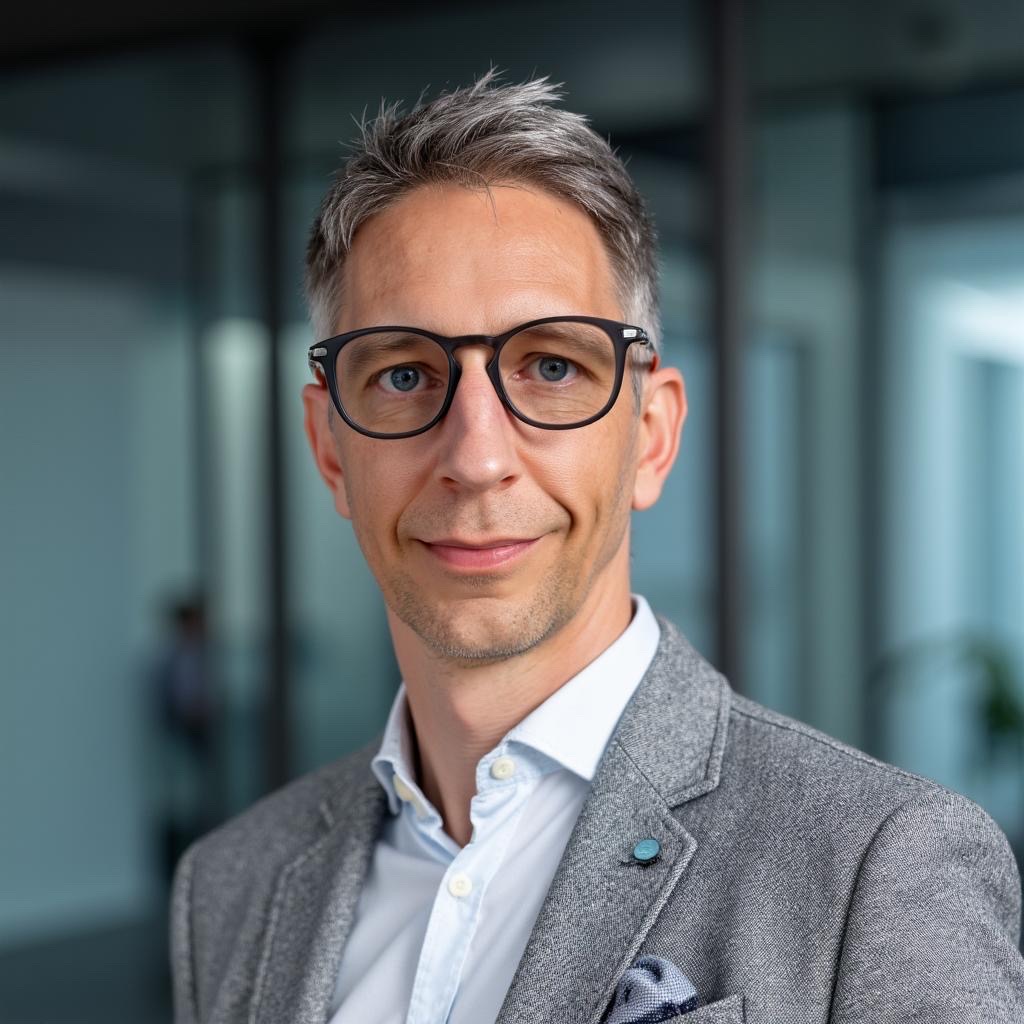
Hi, I'm your host, Dominique Mas, and I'm the founder at Group Coaching HQ. And today my guest is Hartmuth Gildanowski, Agile and Innovation Coach at Takeda Pharmaceuticals. I recently got to know Hartmuth, and I was immediately taken by his candor and his love for coaching. In this episode, he shares the honest story of how a small group of internal coaches launched a coaching pilot in Zurich that reached roughly 100 employees in just 2 years, and it almost started by accident. You'll hear how Hartmuth went from resisting the inner work of coaching at a 2-day training to becoming the person bringing that inner work to others. He shares the fears that the team had going in, the organic way the pilot grew, and why they opened it to all 1,300 employees at the Zurich office rather than just senior leaders.
Enjoy the episode.
Hartmuth, welcome to the Coaching in Organizations podcast.
Hartmuth Gildanowski: Thank you so much for having me here, Dom.
Dom Mas: Absolutely. I'm excited to chat. Before we dive into our topic for today, I want to share a little bit about you, and then you can let me know if I missed anything. You are an Agile and Innovation Coach with over 15 years of experience transforming organizations, products, and teams. Currently working at Takeda Pharmaceuticals, you bring together design thinking, lean startup, and agile methodologies with a deeply human-centered approach to leadership and organizational change. You're a Co-Active Certified Professional Coach, OSCE-trained Systems Coach, ICF/ACC, you have it all, and you work at the intersection of organizational development, team dynamics, and innovation. You're currently also serving as President-Elect of the ICF Switzerland chapter, where you're actively shaping the future of the coaching profession in the country.
In addition, you're a lecturer at FHNW University and a lead trainer empowering managers and teams in CX, OKRs, and digital innovation. You're passionate about building organizations that people love to work in. We need those these days, places where joyful work and high performance go hand in hand.
Did I miss anything?
Hartmuth Gildanowski: Thank you so much. This is wonderful to hear back.
Dom Mas: I'm glad.
Hartmuth Gildanowski: It doesn't sound so great when you have it in your own mind, so it's great to hear. And definitely, you know, it gives you gray hair, so.
Dom Mas: It's worth it.
Hartmuth Gildanowski: It's worth it.
Dom Mas: Well, I always love to get to, for everyone to get to know our guests. So tell me a little bit about how you actually got into coaching.
Hartmuth Gildanowski: Oh, yeah, that's a wonderful story. I love to tell that story. It was about 10 years ago or so when I was working at Swisscom, back then at Swisscom, and one of my colleagues, he organized actually for the whole team a, you know, an immersive foundational training. So like one of these 2-day trainings with, actually, with CTI, so Co-Active Coaching. And I hated it. It was, you know, it was one of these, one of these moments where, you know, you had to, you know, be in yourself, you know, feel your emotion, read the room, you know. And I was standing there and thinking, well, can we just stop hugging trees here and, you know, get back to business?
So it was like, I was like in this, in myself, in a moment where I just couldn't connect to that, right? But it took a while, it took a few years, so I'm not the fastest learner. But then I really realized that actually this was one of the elements why all the things I otherwise did well didn't really work or didn't really stick also in organizations, right? So when you work with organizations, with large systems, you can work at certain levels, and we definitely will talk about that now in the podcast as well. But it just took for me this realization that, well, this is a part that, you know, it was a true blind spot.
Dom Mas: Yeah, you actually just started hinting at that, but I'm curious, how does that translate for you today, 10 years later, into helping to build a coaching culture at Takeda?
Hartmuth Gildanowski: Well, it definitely helped that I approached this topic and, you know, yeah, also just the approach with much more humility, humbleness, right? So I truly, you know, feel that, how difficult it is, right, to transform an organization. Not just technically, but really just also from a human side, right? And I think this gives me, you know, a way to be more grounded in what I do, but also to be more able to really connect to people where they are, not where I would love them to be, but where they are, and just figure out, you know, the way forward.
Dom Mas: Yeah, you raise such an important point with two things that I want to bring up. One is, are people ready to receive whatever it is we want to give them? And two, it takes so much inner work from each person to transform the organization. So we're going to dive into all of that. Our focus for today is really going to be thinking about how you built your pilot, measuring an ROI of a pilot. Before we do that, just so that we ground this into a context, can you give us a little bit of details around the coaching landscape at Takeda? What does it look like at the moment?
Hartmuth Gildanowski: So the coaching landscape at Takeda is, I would say, very nascent. So it's very in the beginning, right? It's very much starting. There's a good, I would say, basic understanding of why a coaching approach or coaching stance is important for leaders as well and for the organization. But as a whole, so in terms of like, you know, an approach or systematic also activities, it's very much at the beginning. Also, I would say it's one of the most complex organizations I've ever worked with, right? So just by the nature of the organization, it has basically a Japanese foundation, 200-year-old history, foundation culture.
And over the last, I would say, 20 years or so, the company morphed a lot, you know? There was a lot of mergers and acquisitions and a lot of changes in the organizational structure. And today, the organization is a really multicultural, multifaceted organization with over 50,000 employees globally. So this just scale and, you know, breadth of the organization just also creates an internal complexity, right, to such an endeavor.
Dom Mas: Yeah, yeah. And it's almost hard in that case to create the one culture. I mean, you have so many cultures that are coming together.
Hartmuth Gildanowski: Yeah, yeah.
Dom Mas: And we'll watch.
Hartmuth Gildanowski: One becomes a completely different notion, right? One doesn't mean a singular culture, but actually one that combines, right? It's more a wholeness than a oneness.
Dom Mas: That's beautiful. That's such a beautiful way of saying it. And we'll dive into that a little bit because you decided to create a pilot for one office, which was the Zurich office, and focus on your local environment. When you decided to create that pilot, what were the hypotheses that you were exploring and what were you trying to answer by creating this coaching pilot?
Hartmuth Gildanowski: Yeah. So as I said, right, so in such a complex organization, the one thing that is really, you know, that really takes a lot of energy and a lot of effort is to make a concise decision, right? So to find, to bring, so to speak, the organization to a level where it can decide for the whole organization. So knowing that, I knew that it would be easier to, so to speak, break the problem down into something where we can better manage. And of course, luckily, here in Switzerland, in Zurich, we have one of the three main headquarters of Takeda globally. So you have basically all organizational functions there, and it is a, you know, large enough body of people, of organization, where you can also, you know, generate enough data points and enough validity for such an experiment. So we, and this sounds now more planned than it actually was, right?
So it was more like a stumbling upon this realization, right, that we should do that. But it was really, so it was really started almost by accident, right? By just, you know, engaging with colleagues, seeing that, oh, there's more than just me as a professional coach. So there were other coaches there as well. And we just got into conversation and said, well, what if, right? What if we did that? What if we started that?
And that's basically where we kicked it off, yeah.
Dom Mas: I hear the innovation side of you starting to come out. I love it. I love it. You mentioned when we talked before that when you decided to go for it, you actually expected that it would be hard to find leaders, people who would be interested in coaching, but the opposite happened. Tell us a little bit about what you noticed then and what did that reveal to you? What did you learn from that?
Hartmuth Gildanowski: There were multiple fears also within the team, right? So there was a fear that, well, what if we provide the service and suddenly, you know, the whole organization, you know, knocks at our door? So what if we cannot, you know, provide that service we did basically in our free time, right? And the other fear was, well, what if we don't find enough coaches, right? So we were just, you know, three people at the beginning. The purpose of this experiment of the coaching community was basically twofold, right? So it was like, it was providing service to the organization, coaching services, and explore basically the feasibility and viability of that, but also figuring out how we can build more coaching capacity within the organization, either through educating or through creating awareness with leaders, but also through building coaches.
And basically, both fears were not really or didn't pan out that way. So first of all, you know, we very organically found, you know, here and there another coach or a person who was actually in a coach training, so who was also looking for, you know, for ways to gain some hours, coaching training hours. We had very organically having people say, oh, this is really something I was thinking about a long time ago. Never came, you know, to the point to actually engage with it.
Well, now I have a community. I have people who actually can help me on that path. So it was really organically working. And on the demand side, so to speak, on the service side, we just kept it, again, very organically, right? So we didn't create a huge communication program or something. So we just made a communication in the internal newsletter said, hey, that's a new service here.
Come and see it. We had a short landing page explaining what we do, some essential informations. And from there, it really just started to tickle in a way that we were able to also, you know, just manage the workload, so to speak, very well. So in a way, it was almost too easy. So we had a lot of fear about, can it work? Does it work? But then at the end, you know, it just very smoothly just started, yeah.
Group Coaching HQ: Quick pause, because if you're responsible for scaling coaching across regions or business units, this is for you. If you're like many of the coaching and talent leaders out there, you're being asked to expand access to coaching while still driving ROI, retention, and building a real coaching culture. Those who get this right are investing in structured group coaching. And that's where we at Group Coaching HQ come in. Coaches from global brands, universities, healthcare systems, and public sector organizations have joined our ICF-approved 12-week Group Coach certification program, earning 30 ICF CCEUs while gaining the frameworks, toolkit, and community to confidently build and lead impactful group coaching programs.
Need something tailored? We deliver custom workshops, train-the-trainer programs, and consulting to help you design the right structure for your organization. And if you want turnkey support, we provide seamless, high-quality group coaching delivery from coaching matching through to final reporting. If you're ready to amplify leadership impact through small group interventions, visit groupcoachinghq.com and find the collaboration option that's right for your organization.
Dom Mas: You said you put something in the newsletter. That means you opened it to all 1,300 employees in Zurich, not just senior leaders.
Hartmuth Gildanowski: Yeah.
Dom Mas: Tell us about that and why it was most important to you to open it up to everybody.
Hartmuth Gildanowski: Yeah. Yeah, so of course, as a lot of organizations have, Takeda also has leadership coaching, right? So for executive levels, they have external coaches for them. But for the vast majority of employees and contributors, there's none of these services. There were some pockets of, you know, special functions that provided similar services, but nothing like systematically just be there. And one of the guiding principles or philosophies behind that coaching community was also that we said, well, Takeda is undergoing a constant change, right? A constant transformation that demands or, you know, that can benefit also from a capacity of self-reflection within the, you know, the population, within the employees, where they can better cope or better respond to those changes, right?
So all around resilience, right? So how do we build resilience into the organization from the get-go? And that's why we clearly said, you know, it has to be open for everyone because we want everyone to be able to respond better to the changes. So that's why we opened that. And I think it is also the right approach if you really want to have a, again, a full, you know, a whole approach to organizational transformation to build that capacity from within, basically.
Dom Mas: This reminds me of something I heard a couple of days ago, which I thought was really powerful. The person said, "Organizations scale what they value." And I thought that was what you're saying here, the fact that employees, people are valued and we want to help them build resilience, build capacity for change versus we want to build performance so that they generate more revenue because ultimately the resistance creates or the resilience creates what it takes to build more revenue, what it takes to build engagement, retention.
Hartmuth Gildanowski: Email performance.
Dom Mas: Exactly. Exactly. Yeah.
So thank you so much for sharing that. When you think actually about impact and the people that you were able to coach and if you have numbers, that would be great. Like how many did you actually end up coaching? And when you think about impact, what evidence did you want to gather that would matter most early on so that you could potentially replicate in the future?
Hartmuth Gildanowski: Yeah. So during the last two years roughly now, we managed to coach roughly 100 people in those two years. Again, right, everything done, so to speak, pro bono and next to our work. Typically, we had a coaching duration of three to six coaching sessions with them. Again, depending on the topic also, people broad. I would say the biggest benefit really was or is that we were able to, again, just strengthen the internal resilience of people. I mean, the bandwidth of questions that came into the coaching were very, very broad, right?
Very wide. And I would say that in essence, there's just this level up of this leveling up of aliveness for people, right? So they feel more connected, more alive. They understand that they have a choice, right? They understand how to use also the choice they have. And this overall just creates more connectivity within the organization, right? It's difficult to really break it down to a return on invest, but there were definitely, if you would go through these 100 cases, you would find cases where we were helping people, you know, either progress in the job or stay in the job, so don't leave the company, or, you know, or have a different conversation, a different way of creating conversations within their team.
So reducing mental friction, mental load, etc. So there was everything, right?
Dom Mas: Yeah. And I mean, this is amazing. And these are things that you can measure, right? If you look ultimately, like when you look at, for example, retention, how many people who have been coached are actually staying versus those who haven't. And you just said having different types of conversations. I know one of the challenges that you named was getting people to see coaching not just as a tool, but as a way of being almost, as a leadership stance. How did you do that?
How did you shift that understanding of what coaching is? And did you measure it or are there ways that you're thinking of measuring it in the future?
Hartmuth Gildanowski: We didn't pose that question yet, so we didn't measure it, you know, the understanding level of coaching yet. But that's definitely also an interesting question to ponder. But we more looked at really at how can we help people understand what the benefit of coaching is very easily and very directly without, you know, going into too much, you know, explanation and cognitive load, so to speak. And what we chose here is really, so we had, of course, we had an internal website where we just created a very clear distinction between, for example, also mentoring, right? So there's some internal mentoring program. So how is it distinct to mentoring? What is the coaching approach?
What are other services that are available to employees? So support when you are really in distress or family issues, right? So there's also official channels for that. So we clearly positioned our offering, so to speak, in that space of self-orientation, of understanding who I am and where I want to be. So really as a way to have a conversation outside of the organizational construct, but still within the organization. So it's still, of course, it's people who understand the organization and the context, but who are still neutral enough, so to speak, to have an open dialogue. And basically, what we found, what really helped was just to have a short session, 15 minute, 20 minute, where we basically just gave them a taster of how such a coaching session would look like, right?
So that they really could then decide whether or not they want to continue with that.
Dom Mas: I love that so much. What a great idea. And coaching is so hard to explain. And the second you experience it, you want it.
Hartmuth Gildanowski: Yeah, exactly.
Dom Mas: So getting people to experience it or witness it is 100% the best way for people to understand what it is.
Hartmuth Gildanowski: Yeah, I had a couple of people, right, saying to me, "I read the page, but I still don't get it."
Dom Mas: Yeah, absolutely.
Hartmuth Gildanowski: You just did it quickly with them, right? You just gave them an example, a taster of how it feels like, and then it clicked for them. It made sense.
Dom Mas: I'm going to move a tiny bit to a different question because you had talked about that tension almost between a program that could be for the, you called it not a one culture, but a whole, I think.
Hartmuth Gildanowski: Yeah, the wholeness, yeah.
Dom Mas: Yeah, the wholeness. Exactly, exactly. And so if we think about broad awareness programs, so, you know, company-wide, 50,000 people, and deeper local experiments.
Hartmuth Gildanowski: Yeah.
Dom Mas: Tell us a little bit about that and what helped you decide to stay local and what you were able to achieve from that way versus if you had tried to go broad early on.
Hartmuth Gildanowski: Yeah, I think there's a difference or a distinction between, so to speak, you named it earlier, the value part, right? The values of a company or the strategy and the goals, etc. So the more abstract aspects of an organization, the more maybe, you know, cognitive heavy load of an organization, which you can and which you have to somehow make sure that there is like a one message, right? So you want to have clarity in that regard. But when it comes to something like culture and coaching and, so to speak, finding your connectivity to that one message, that just looks vastly different whether you are in India or in Slovakia or in China or in Japan or in the US, right? Because just the, yeah, just the context is so vastly different, right? People here in Zurich, they have, even though there's a large part of the body, so to speak, are expats with over 55 different nationalities, but still somehow they are within that same context of Switzerland and the office and the way they're working and how they are connected to that global mission that is different to the people in, for example, in Bangalore, right, in our Innovation Capability Center.
So I think that's a challenge, right? Is for an organization, if you want to create cultural change, you can have it as an idea, so to speak, you know, aligned globally, but you have to execute that locally. There's no way around that. And I mean, of course, there's also tremendous other components, especially when we talk about coaching, right? So the data and privacy guidelines, the ethical guidelines, right, that need to be tweaked or adjusted, right, are just very important factors as well.
Dom Mas: Actually thinking about that, what other hidden costs or drains did you see once you started running the pilot? What did you notice that, oh, we hadn't thought of that before starting? Or, yeah, what were some of those areas that perhaps you have learned from that our listeners can think about?
Hartmuth Gildanowski: Yeah, I think, and that doesn't really have to do anything directly with coaching itself, but it just became visible now with that experiment also, is that in organizations, when we, as organizational designers or change managers, etc., when we work on topics, we typically just see one component, right? So we see coaching, we see mentoring, we see leadership development, we see this and that. But what we very seldom, what we really do and appreciate also is actually that these things need to connect, right? So you need to somehow, you need to create a connective storyline and a connective intentionality behind all of these things, right? So making sure that your coaching program somehow connects to a performance goal, right, or to a performance ambition of the organization. So finding arguments why this is important, but also connecting it to a leadership program or to a DE&I&B program, right? So there's so many moving parts in especially large organizations that most of the time what happens is that people really focus in on just the part and not on the connective tissue, so to speak.
And that's also where a lot of, not tension, but like you said, there's a lot of just churn happening in between those things, right?
Dom Mas: Yeah, yeah. And it also makes me think about sponsorship, right? If we want the program to be sponsored, there has to be a connection to ultimately what does that mean for the organization and our strategic goals. And if there isn't a connection or if you can't make the connection, then there are more chances the program will be sponsored. And actually, that brings me to this question of who were the people, the allies that you needed help from in order to make sure that this program would happen and that it was a program that could be trusted by leadership.
Hartmuth Gildanowski: Yeah. Yeah, so what definitely helped was to have support from local HR that, so to speak, gave us the leash to run this experiment and to work with it within given boundaries, of course. And also just, I would say also the support then of each and everyone's, you know, line manager. So from the coach's perspective, right, that they also, so to speak, you know, gave enough time and capacity and resource, so to speak, to that. So that's definitely something that helps. And I would say, like you said, to scale it, you definitely need, you know, a top executive level sponsor to make that happen because that is basically the only role in a system that can, so to speak, overrule local interests, right? So top level executives, they are mandated to basically keep the whole system running versus like middle level tier managers, they're more focused on the execution of their respective silo, whether or not that there is a silo, but their local context.
And something like coaching, which is like a, you know, a capacity that is just, you know, within the whole organization is something that I feel has to be, you know, carried by a top executive.
Dom Mas: So we are getting to the end of this conversation. And as you know, we have an unapologetic love for group coaching. So really bringing people together who might not know each other, but they work in a similar context. They're not dependent on each other. So it might be groups like of new managers or directors from different regions or departments. So I'm curious for you at Takeda, looking ahead, where do you see the strongest ROI case if you decided to offer group coaching for your organization?
Hartmuth Gildanowski: Yeah, I would say definitely around new leaders, right? So helping the leadership tier to align because that's what they also need to be able to do. So I can see that their group coaching becoming very, very helpful in just gelling that direction. But then also just in, again, in the cultural understanding, right? So if you have such a diverse organization to bring people together from various cultural backgrounds, ethnical backgrounds, you know, gender and just demographic backgrounds or states and have them work together or, you know, work on a question together, that's where I see group coaching can definitely help. Yeah.
Dom Mas: Yeah, thank you for that. We did a study recently and actually the, I think the number was 66% of companies that currently use group coaching were using it to support new leaders, new people leaders to make sure that they were connected and that they didn't feel like they were alone in dealing with their learning to be a leader. So our last question is always the same. What would be your best advice for those who are looking to build the coaching culture at their organization?
Hartmuth Gildanowski: Yeah, definitely don't overthink it. Don't overthink it. So just really do it, right? Trust that you will find a way, that you find the allies, that you find the capacity to do it. If you do the right thing and you still do it wrong, it's still better than to do the wrong thing and do that right. So you cannot lose.
Dom Mas: Oh, that's going to be our quote of the day. Thank you so much, Hartmuth, for your presence and everything that you shared and also your openness to sharing how you moved from not really wanting to do the inner work to being the person who's bringing that inner work to others. Really appreciate you. Listeners, feel free to connect with Hartmuth. His details will be in the show notes so you can connect on LinkedIn. Thanks so much, Hartmuth. Have a wonderful rest of your day.
Thanks, everybody. Bye. Thanks so much for joining us today. Follow us on LinkedIn, Instagram, and YouTube at Group Coaching HQ. And remember to subscribe to our mailing list for updates and upcoming events. You can find all of the information and links in the show notes. The Coaching in Organizations podcast is brought to you by Group Coaching HQ and is produced and edited by Mark Pagán.
.png)




.png)